.svg)
.png)
There’s a debate that comes up all the time in marketing.
B2B is different from B2C. Different buyers. Different journeys. Different tactics. On paper, that sounds reasonable. In practice, it breaks down pretty quickly.
On a new episode of The Frictionless Experience, Nick Paladino and I sat down with Tanya Thorson to talk about what actually drives growth. Tanya spent more than 20 years in retail at Lands’ End, Jockey International, and New Balance before moving into B2B SaaS in 2020. She brought a merchant mindset with her and rebuilt her company’s go-to-market from the ground up, ultimately doubling ARR.
What stood out in the conversation wasn’t just her perspective on metrics or funnels. It was how quickly she rejected the idea that B2B and B2C are fundamentally different.
Because from where she sits, they aren’t.
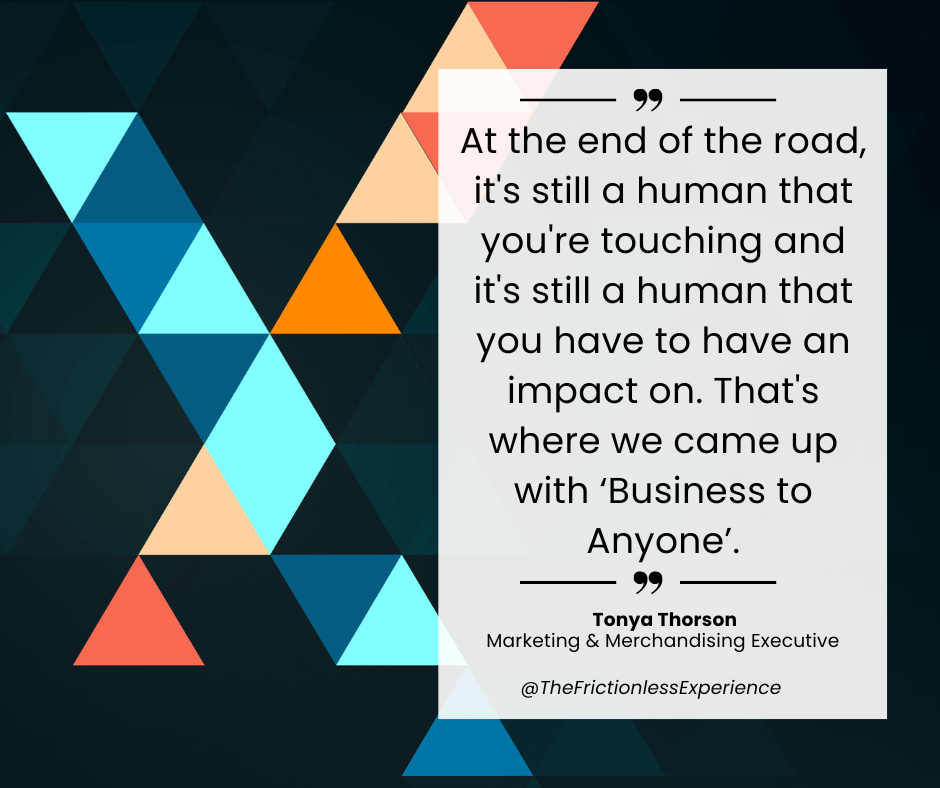
That’s the core idea behind B2A. Business to anyone.
And once you start looking at your strategy through that lens, a lot of conventional thinking starts to fall apart.
The B2B vs. B2C Divide Doesn’t Reflect Reality
The traditional view is simple. B2C is emotional, fast, and intuitive. B2B is rational, complex, and structured. But that assumes people behave differently depending on whether they’re at work or at home.
They don’t.
The same person who expects a seamless, low-friction experience buying something personally does not suddenly accept a clunky, gated, slow experience just because they’re making a business decision.
They still:
- Research on their own
- Compare options across channels
- Look for signals they can trust
- Avoid unnecessary friction
And most importantly, they don’t think in funnels.
Tanya made that point clearly:
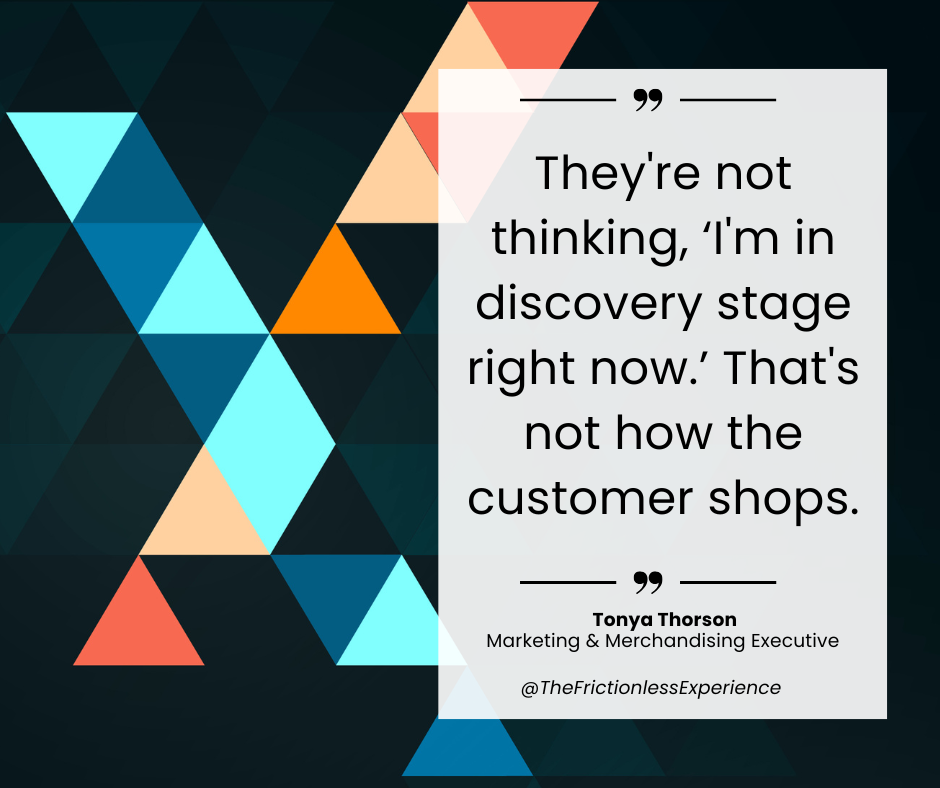
That behavior is consistent across B2C and B2B. The only real difference is the level of complexity and the number of stakeholders.
Which means the real shift is not from B2B to B2C thinking. It’s from both to B2A.
B2A Forces You to Rethink What You Measure
Once you accept that you’re always selling to people, the next question becomes how you measure success. This is where most B2B organizations get stuck.
They rely on internal metrics that reflect their process, not the buyer’s experience. MQLs. SQLs. Conversion rates tied to specific gates.
At one point in the conversation, I said something I’ve seen play out over and over again: “I've never met a CEO who cared about MQLs and SQLs or even understood half of really what they are.”
That’s because those metrics don’t reflect how people actually buy. They reflect how companies track.
Tanya’s reaction to those metrics was just as direct:
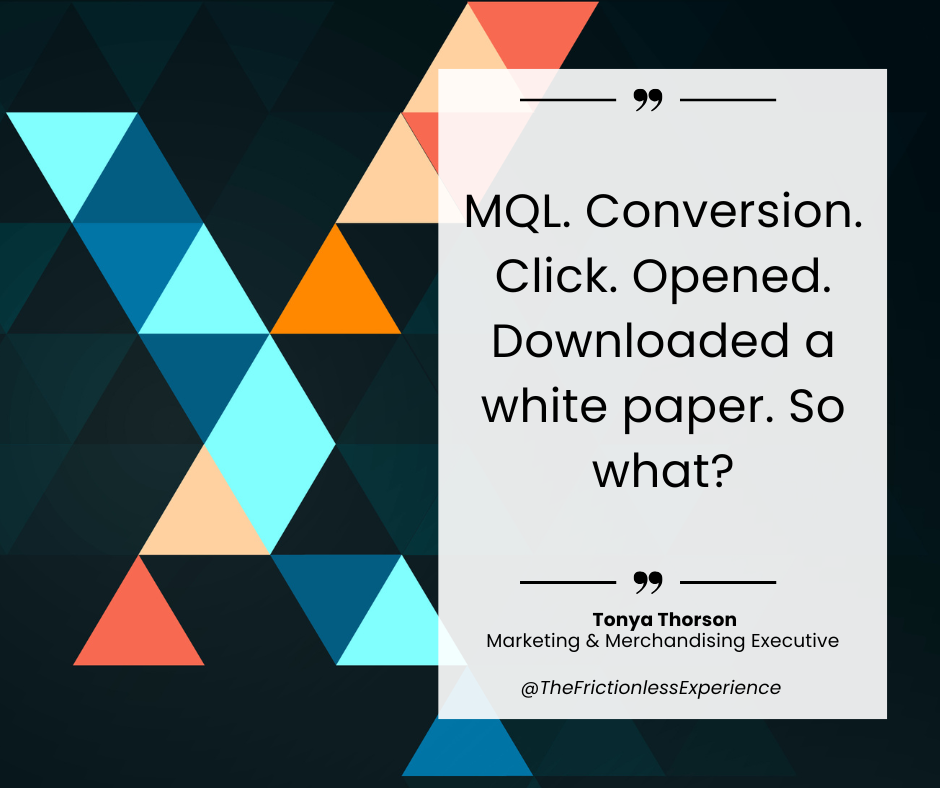
That “so what” matters more in a B2A world.
Because if your metrics don’t connect to real outcomes, they don’t tell you whether you’re actually helping someone make a decision.
And in some cases, they’re not even stable: “We could adjust it if we weren't seeing the numbers we wanted to see. It was all subjective.”
That’s how you end up optimizing for activity instead of growth.
The Funnel Breaks When You Focus on Real People
The idea of B2A also exposes one of the biggest flaws in traditional B2B marketing.
The funnel.
Funnels are built for systems. People don’t behave that way. During the episode, I described what actually happens in most deals:
“The sale moves down the field and then it goes back. Somebody leaves, somebody new comes in. And now the sale moves back down the field in the opposite direction.”
It’s not linear because people aren’t linear.
Tanya captured that dynamic in one line: “They're like a ping pong ball… there's this whole nonlinear environment.”
That applies whether someone is buying software or buying a pair of shoes. The path is messy. The order is unpredictable. The decision builds over time.
Which means a single moment like an MQL tells you very little about what actually influenced the outcome.
B2A Exposes Where We Create Friction
When you design for MQLs, you design for capture. But when you design for people, you design for exploration. That’s a fundamental shift.
We talked about this in the context of gated content. It’s one of the clearest examples of how B2B practices diverge from how people actually want to engage.
We’ve all done it. Hit a form, entered a throwaway email, and moved on. That behavior alone should tell you something. When we tested ungated content, engagement didn’t just improve slightly. People went deeper. They explored more. They stayed longer.
Tanya’s reaction framed the tradeoff perfectly: “How many do you think you're losing because they don't want to give you your information?”
In a B2A model, that question becomes more important than how many leads you captured.
Because buyers need time. In many cases, they go through dozens of touchpoints before they’re ready to engage directly. If you force a conversion too early, you don’t accelerate that process. You interrupt it.
Alignment Around Revenue Is a B2A Outcome
This is where the metrics conversation comes back in. If you’re truly operating in a B2A model, your internal structure has to reflect that.
The buyer experiences one journey. Your teams should be aligned around one outcome.
Revenue. It’s the clearest signal that you successfully helped someone move from problem to solution. Tanya described what happened when they aligned around it: “We broke down those silos… we knew that we were all accountable for the P&L number.”
That alignment is what allows a B2A approach to actually work.
- Marketing stops optimizing for handoffs.
- Sales engages in context, not at the end.
- And customer success becomes part of the experience from the beginning.
Everything connects because it’s all tied to the same outcome.
Relevance Is What Makes B2A Work
If B2A is about people, then relevance is what makes it effective. Not surface-level personalization. Not inserting a first name into a template. Actual relevance.
I put it simply during the episode: “Relevance is, I know you are struggling with this problem, I think we can help solve it.”
That applies equally in B2C and B2B. The message has to connect to a real need.
Tanya expanded on that idea:
“Try to understand their pain points and potential outcomes instead of a generic email. That's meaningless today.”
When the message is relevant, it removes hesitation. It helps the buyer understand quickly whether this is worth their time. That’s what moves decisions forward.
Final Thought
The idea that B2B and B2C require fundamentally different strategies is comfortable, but it’s outdated.
What actually matters is much simpler. You’re always selling to people. That’s what B2A captures. And once you start operating that way, a lot of legacy thinking stops making sense.
- MQLs and SQLs become less important than actual outcomes.
- Funnels give way to real, nonlinear behavior.
- Experiences shift from forcing conversion to enabling exploration.
This episode of The Frictionless Experience made that clear.
The companies that win are not the ones that pick the right category. They’re the ones that understand the person on the other side of the decision and build everything around that.